
The Faculty of Nursing Holds a Training Course on Initial Cardiopulmonary Resuscitation
On December 14th 2010, the Faculty of Nursing at the University organized a training course titled "Initial Cardiopulmonary Resuscitation" for second year students at the Faculty. Participants included Dr. Aidah Al-Kaissi, Dean of the Faculty, and a number of instructors and students. The course was organized at the Faculty's laboratories as an extracurricular activity to provide students with practical experience and enhance their field knowledge.
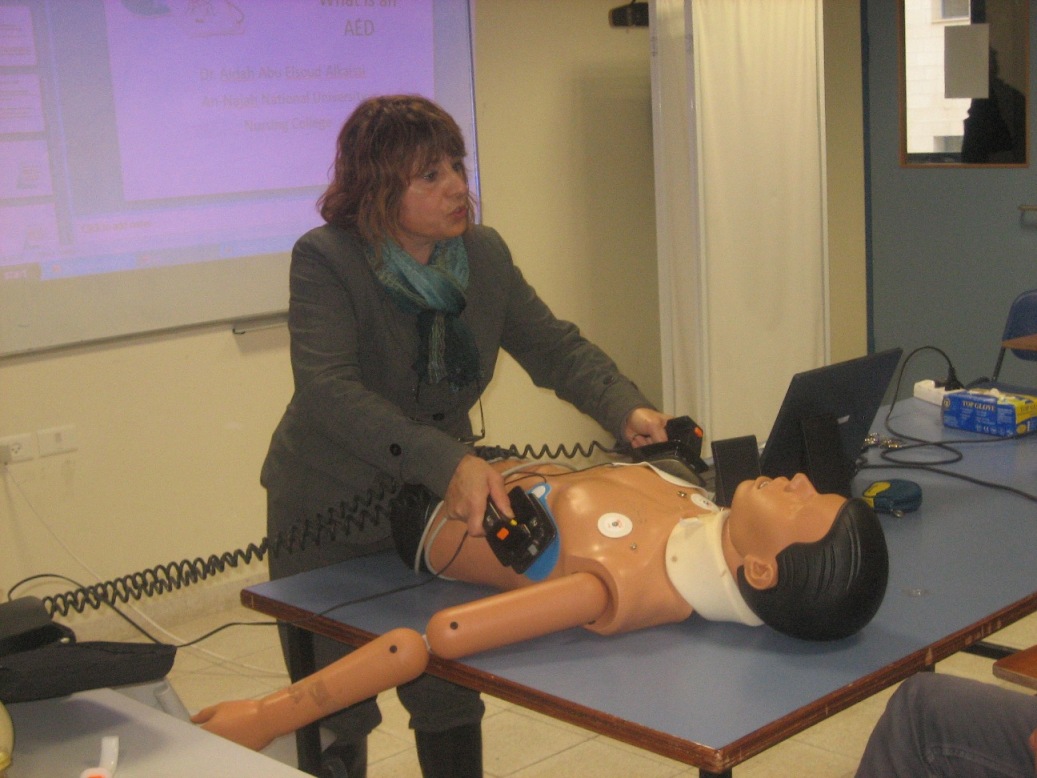
The course focused on dealing with heart and lung resuscitation for newborns, young children and adults according to the recommendations by the American Heart Association for the year 2010. It aimed specifically to teach students how to apply initial cardiopulmonary resuscitation and familiarize them with the recommendations by the American Heart Association on this issue.
Dr. Al-Kaissi mentioned that the course was very important for the students as it introduced them to one of the most critical issues in the field of health and nursing which is cardiopulmonary resuscitation. She said that this procedure is crucial to save the life of people who experience cardiopulmonary failure. It is so important for the students of nursing to learn how to carry out this procedure very quickly because any moment of delay can reduce survival rates by 10%; as time passes on the patient's chances of survival become very slim.
The course included training students on how to apply cardiopulmonary resuscitation to a person in cardiac arrest whether inside or outside the hospital both manually and through the defibrillation procedure in which an electric shock is delivered to the patient's chest using a special device called a defibrillator. This would help students deal with cases of cardiopulmonary failure effectively and gain experience in artificial resuscitation.
During the course, Dr. Al-Kaissi also explained a number of facts and information related to cardiopulmonary resuscitation. She said that delivering an electrical shock using the defibrillator in the first minute gives the patient a 90% survival chance, after 5 minutes the rate drops to 50%, seven minutes later the situation becomes critical as survival chance decreases to 30%. Within nine minutes survival rate continues to decrease to 10% and twelve minutes later it drops to a critical 5%.
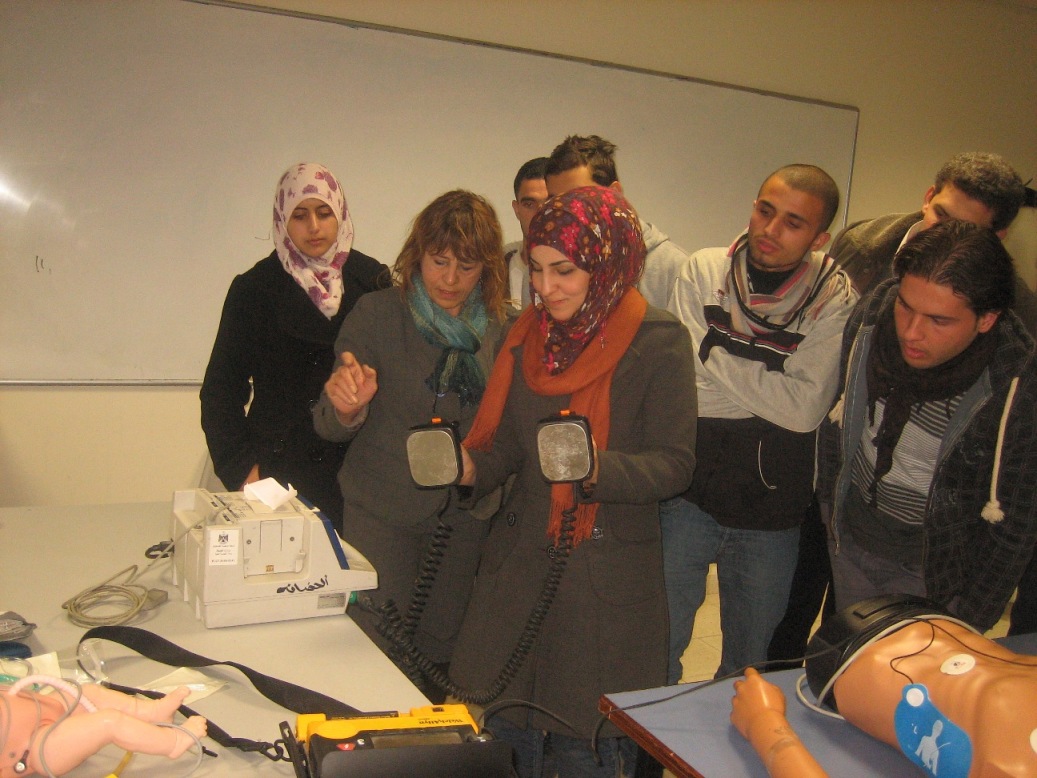
She added that thousands of people around the world die every year of heart attacks and said that manual resuscitation by applying chest compressions aims to create artificial circulation by manually pumping blood through the heart and the rescuer can also provide artificial respiration to the patient. However, this method is not always enough to restart the heart that undergoes ventricular fibrillation, a condition in which the cardiac muscle of the ventricles in the heart lacks coordinated contraction.
She pointed out that according to the recommendations by the American Heart Association for the year 2010, a patient who is experiencing ventricular fibrillation must receive a dose of therapeutic electrical shock using the defibrillator which works on restoring the heart's rhythm. This procedure is vital to the survival of the patient since ventricular tachycardia could also lead to cardiac arrest or ventricular fibrillation. Ventricular tachycardia is a condition in which the heart's rhythm becomes very fast and it is life-threatening as it could lead to sudden death or asystole (no cardiac electrical activity).
Dr. Al-Kaissi emphasized that there are several things that the nurse should consider when applying artificial resuscitation using electrical shocks. The nurse must make sure that the patient's chest is dry, that chest hair is removed, especially if it is thick, also to remove any kind of jewelry and make sure that the patient, the rescuer and others are safe before starting to use the defibrillator.
Dr. Najwa Subuh delivered two lectures on intensive resuscitation of preemie babies and babies who are more than one month old. She focused on introducing the latest scientific developments regarding this issue according to the American Heart Association. She explained the reasons behind cardiac arrest in babies and how to apply resuscitation to them as well as explaining a number of concepts related to newborns and preemie babies (premature babies) during the gestational period.
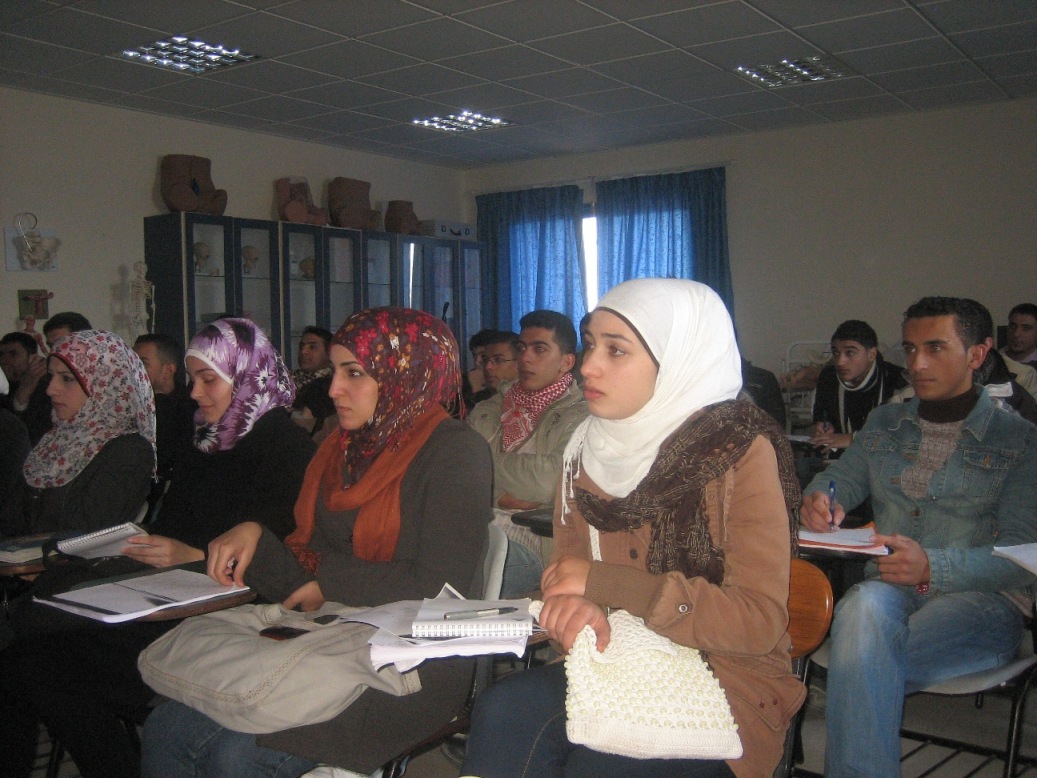
Moreover, she discussed the first steps in resuscitation and the mechanism of providing ventilation and oxygen for the newborn. The first minutes of a newborn's life are very critical as many babies experience difficulties in breathing and some may develop birth asphyxia (a condition that occurs when the newborn is deprived from an adequate supply of oxygen). In such cases, the nurse must apply sucking of mouth and nose secretions, secure an adequate amount of oxygen and conduct a postnatal evaluation of the newborn's heart rhythm and respiration to make sure that blood circulation and breathing are normal.
Another lecture was delivered by Fatima Hirzallah on initial resuscitation of adults in which she spoke about the mechanism of saving the life of a patient and hospitalization using basic steps. She also explained to the students how to deal with the patient if he does not respond or if his breathing is not normal. She emphasized a number of procedures that make up what scientists call (Basic Life Support, BLS). This includes how to apply chest compressions, artificial respiration and then look for signs that indicate that the patient started to regain consciousness.
Students were also trained on how to deal with basic airway management which requires the possession of competency and special knowledge regarding this procedure in order to provide the best medical services to the patients. This helps in saving their lives quickly before resorting to advanced aid methods such as artificial respiration.
Other topics were also discussed such as the methods used to open the patient's airway which include head tilt and chin lift, thereby lifting the tongue from the back of the patient's throat and clearing the airway. At the end of the course, Dr. Al-Kaissi thanked the participants for their interest in the event and valued the students' attendance which surely provided them with extra practical knowledge on one of the most important issues in the field of nursing.
The participants finally presented a number of recommendations that included emphasizing the necessity for training different people who work at public institutions on how to apply resuscitation on site. They also emphasized the importance of raising awareness among the public regarding this issue through schools, institutes and universities and called for the installation of defibrillators at the different public institutions or places including banks, schools, large companies, police departments and others.


