Centre of Excellence in Learning and Teaching Organises a Workshop on Education ILOs and Methods of Assessment in Community-Based Learning
On Monday, December 30, 2013, the Centre of Excellence in Learning and Teaching at An-Najah National University organised a workshop on designing learning outcomes and methods of community-based learning. Dr. Abdulkareem Daraghmeh, the Director of the Centre; Dr. Samar Musmar and Dr. Zaher Nazzal from the Faculty of Medicine and Health Sciences; Dr. Imad Dawwas, Dr. Yahya Saleh and Dr., Abdulrazzaq Natsheh from the Faculty of Engineering and Information Technology; Dr. Nimr Khreim from the Faculty of Economy and Social Sciences; and Mrs. Maysaa Abu Zant from the Faculty of Educational Sciences attended the workshop. This training is part of an attempt to spread the community-based learning culture in the University’s academic programmes, and to enhance community partnerships with governmental, non-governmental, and private institutions.
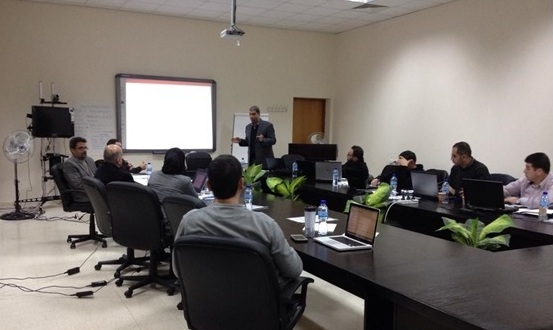
The workshop addressed the issue of how to re-design the Community-Based Learning courses (CBL) in the participating faculties, and this method is considered one of the modern techniques that focus on students’ focal core of interest in the educational learning process. This method includes a higher level of students’ cognition. The workshop provided the participants with theoretical and practical skills on re-designing and course applications, along with the achievement of constructive suitability.
Dr. Raed Al-Kouni and Dr. Abdulkareem Ayyoub moderated the workshop. Dr. Al-Kouni moderated the “Learning Outcomes” session, which discussed the importance of employing the learning outcomes in the community, and the crucial challenges that confront designing the CBL intended learning outcomes (ILOs).
Dr. Daraghmeh moderated the “Methods of Assessing the Learning Outcomes” session, where he addressed the methods of establishing real assessment methods according to international standards, upon which the quality of each skill and cognitive level is described.
Community-Based Learning aims to involve the local community with the University in the process of students’ education, which is rewarding and beneficiary to the local community institutions, and contributes to the advancement of the University ILOs by providing training opportunities and projects from the surrounding community. The participant staff’s curricula will be applied during the second semester of the 2013/2014 academic year.


